Points clés de l'article :
- Art for action.
- Art for awareness.
- Art and culture are used to raise awareness about the climate emergency, but their limitations must be acknowledged.
"Art has the power to change people, and therefore, our future." - Leonard Bernstein. Art, as a cultural medium, offers a way to gently draw attention to issues without being preachy. It provides artists with the opportunity to make the general public reflect on how our societies are designed and how we consume, and even encourages mobilization. In the context of the climate emergency and global warming, a new form of art has emerged: ecological art. Through various media—including painting, photography, music, and film—these modern artists seek to spread messages committed to the fight against climate change. This artistic movement has rapidly gained strength and impact over the last twenty years, emerging as a new form of mediation that makes the public feel more concerned and, consequently, more inclined to commit to behavioral changes in favor of the climate. How can art engage and serve the environmental cause? Art triggers awareness and drives action. It is used to denounce climate change. An overview:
Art for action
To defend something, you must first understand it. Awareness is the first step toward action, and it begins with education on the subject. But what can be done when terms like "greenhouse gases," "radiative forcing," or "ocean acidification" don't resonate with the general public? An artist would tell you: you have to be twice as creative. Art, and ecological art in particular, makes the scale and findings of climate change produced by scientists much more accessible to the general public. It aims to foster awareness and behavioral change by building more sustainable lifestyles and mobilizing the public through the emotions that art evokes.
Many artists have sought to trigger this awareness regarding climate issues, such as Italian sculptor Lorenzo Quinn, who often uses land art—creating works within a natural environment—to denounce, for example, rising sea levels in Venice with his sculpture of hands emerging from the water and gripping the facade of a hotel. Or photographer Daniel Beltra, whose aerial shots highlight the limits of our planet, such as his well-known image of the devastating Deepwater Horizon oil spill in the Gulf of Mexico.
We could also mention "Recycled Art," where many artists use recycled materials in their creations to raise awareness about the pollution crisis and consumer culture. Today, we can certainly define culture as a driver for behavioral change that allows for the development of a new relationship with the world.
Art for denunciation
Some artists, acting as whistleblowers, go further than just raising awareness by seeking to expose and denounce certain human activities, the effects of climate change, or the denial and inaction of our leaders. This is particularly the case with the film *Don't Look Up*, which, despite controversial reviews, serves as a metaphor for climate change denial. This satirical film tells the story of two astronomers who try to warn politicians, the media, and society about an incoming 9-kilometer-wide comet that will collide with Earth and destroy it entirely in six months.
This dark satire clearly denounces the "triangle of inaction," where individuals, politicians, and corporations pass the buck to point fingers at others' responsibilities. It also demonstrates the gap in information and understanding of the subject between scientists and leaders, the media, and the general public. Today, culture also allows certain activists to take hold of climate issues by denouncing the inaction and hypocrisy of political leaders.
In recent years, this denunciation has taken place in museums. Since a museum is an exhibition space, acting within its galleries effectively transforms the protest into a "happening"—an artistic performance that ultimately deserves as much attention as a work of art. These activists seek to trigger awareness among the general public by using art, which is universal, enduring, and therefore much more impactful. This was the case with two environmental activists from the *Just Stop Oil* movement who targeted Van Gogh's masterpiece *Sunflowers* at the National Gallery in London, or the Viennese activists who splashed black liquid on *Death and Life*, a masterpiece by Gustav Klimt.
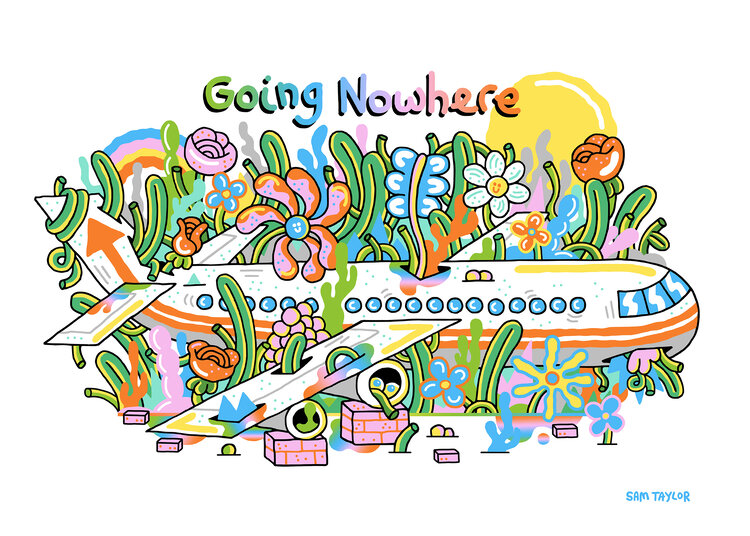
"Artists for Climate is an open call for digital illustrations, graphic design, lettering art and typography. The initiative sought awe-inspiring designs that depict a hopeful future around climate change, or have a clear message around the urgency for actionable change." - Artists for climate
These two actions aimed to denounce the excessive use of fossil fuels, which is one of the main causes of global warming. Furthermore, the interruption of sporting events is increasingly used by environmental activists to denounce and alert the general public to global warming, as seen at the French Open, a Formula 1 Grand Prix, and the Tour de France last summer. These interruptions also allow them to gain significant media coverage.
Art and culture are used to raise awareness about the climate emergency, but their limitations must be acknowledged.
Using culture to raise public awareness, push our leaders to act, generate media attention, or simply pave the way for other types of more or less radical actions seems to be the new lever for those committed to the environment. Ultimately, artists and environmental activists share the same final goal: using art and, more broadly, culture to draw attention to climate change.
Nevertheless, we cannot claim today that art will completely save the planet, as it is not entirely detached from its poetic dimension, which is, in itself, incompatible with pure, hard-line activism. Just as radical environmental activism can prove counterproductive and "eco-terrorist" when it attacks historical and protected works. Thus, one might wonder on what ground artists and environmental activists can meet and target a common cause—the climate—without discrediting it? Ultimately, what are the limits of culture in the fight against climate change?