Points clés de l'article :
- The "French Tech for the Planet" program, supported by the Ministry of Ecological Transition, promotes 20 startups innovating in clean energy and ecological transition to address the challenges of global warming.
- This program and certain investors actively help eco-responsible startups become technological leaders, thereby contributing to a sustainable economy and a significant reduction in CO2 emissions.
- Fundraising for green startups and the development of new environmental assessment methodologies illustrate a movement toward responsible capitalism, combining financial profitability with a positive impact on the environment.
- Decarbonization, which has become a global mission involving startups, investors, and SMEs, plays a key role in tackling environmental challenges, transcending national borders and requiring international collaboration toward a more sustainable future.
With the goal of limiting the devastating effects of global warming and containing the temperature rise to a critical threshold of 2°C, it is imperative that everyone contributes to reducing their carbon footprint—a process known as decarbonization. Decarbonization, a key term in this discussion, refers to all measures and techniques used to reduce carbon dioxide (CO2) emissions produced by human activity (economie.gouv.fr). The figures are alarming: each year, greenhouse gas emissions in France reach an average of nearly 9 tons per person, a figure well above the recommended limit of 2 tons per person required to meet the goals of the Paris Agreement. Faced with this urgency, it is clear that individual efforts by citizens are not enough on their own. The professional sphere, with its key players such as startups, investors, and small and medium-sized enterprises (SMEs), must also take part in this crucial decarbonization effort to reduce greenhouse gas emissions by 55% by 2030 and then reach carbon neutrality by 2050. In this context, it is essential to explore how professional actors such as startups, investors, and SMEs organize and collaborate to meet this major decarbonization challenge and build a more sustainable future. Green startups are emerging as key players in the fight against climate change, while investors, aware of the stakes, are actively engaging in the ecological and financial transition. At the same time, SMEs are also joining this dynamic, reducing their carbon footprint as part of a decarbonization approach.
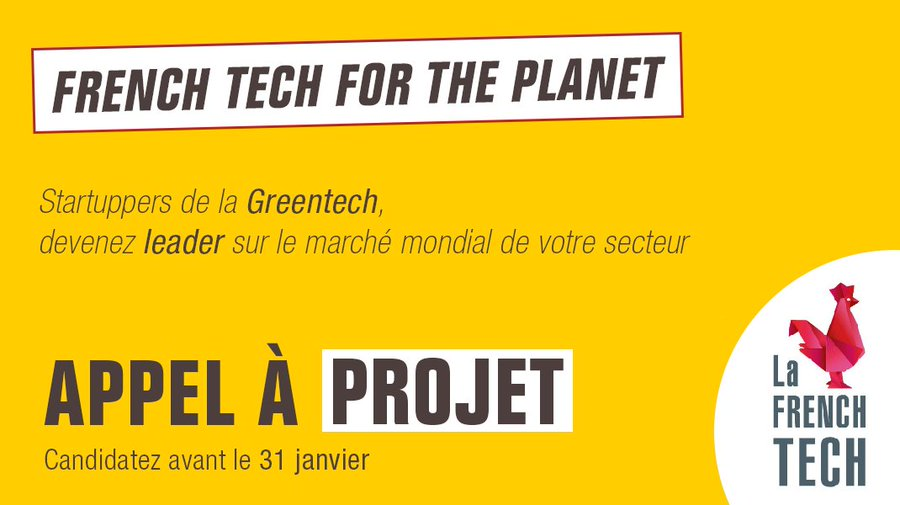
The "French Tech for the Planet" program, supported by the Ministry of Ecological Transition, promotes 20 startups innovating in clean energy and ecological transition to address the challenges of global warming.
In an era where global warming, air pollution, and soil artificialization weigh heavily on our planet, solutions are emerging from the technology sector. The Mission French Tech, in collaboration with the Ministry of Ecological Transition, has initiated the French Tech for the Planet program. This initiative aims to support 20 French startups positioned in clean energy and ecological transition. This support program, similar to the Next40/FT120, aims to propel these companies toward becoming technological leaders in the field of ecological transition. The startups recognized under this program are not just technological players; they are also agents of change in sustainable development. The goal of this initiative is to integrate digital and ecological transitions to transform our ways of living, producing, and consuming in a sustainable manner. These startups demonstrate a remarkable commitment to decarbonization. Among the 20 selected startups, Algama stands out by leveraging the nutritional qualities of microalgae to create vegan food products. DualSun designs high-performance solar panels to promote energy autonomy for buildings. Waga Energy transforms gas from waste storage sites into renewable biomethane, thus contributing to the reduction of greenhouse gas emissions.
The examples of startups mentioned clearly show the diversity of initiatives within the startup ecosystem in France. Their innovative approaches, commitment to decarbonization, and positive impact on the environment testify to the growing importance of these companies in the fight against global warming. Whether in food, energy transition, sustainable materials, or reducing energy consumption, these startups play a central role in the transition toward a greener future. To support the growth of impact startups, investors play an essential role by funding those focused on decarbonization, thereby contributing to the transition toward a more sustainable model.
Investors are resolutely committed to the transition toward a more sustainable economy, prioritizing companies with a positive environmental impact. In France, greenhouse gas emissions have reached alarming levels, requiring immediate action. Faced with this challenge, investment funds recognize the imperative of steering their portfolios toward companies committed to decarbonization. Investors have a clear interest in fostering the growth of the projects they support. Thus, initiatives such as the "START" program from Réseau Entreprendre do not just provide funding; they also offer structuring support to entrepreneurs committed to the ecological transition.
This program and investors actively help eco-responsible startups become technological leaders, thereby contributing to a sustainable economy and a significant reduction in CO2 emissions.
This essential program includes mentors, coaches, and regular meetings with other entrepreneurs sharing the same goals. Similarly, the French Tech for the Planet initiative, mentioned previously, strives to financially support and guide startups toward becoming technological leaders in the field of ecological transition. Other investors like Alter Equity distinguish themselves by supporting positive-impact companies, fostering the transition toward a more sustainable economy. Their commitment has helped avoid more than 5 million tons of CO2, equivalent to more than 1% of France's annual emissions, thanks to the companies in their equity portfolio. They invest in companies that contribute more to society than they take.
Fundraising for green startups and the development of new environmental assessment methodologies illustrate a movement toward responsible capitalism, combining financial profitability with a positive impact on the environment.
Alter Equity notably raised 2 million euros to support the startup Les Ripeurs, which specializes in construction waste treatment, demonstrating their commitment to sustainable companies. These investors are at the forefront of responsible finance, proving that responsibility and profitability are compatible. They also contribute to creating a so-called "third way" model toward responsible capitalism, combining attractive financial returns with positive social and environmental impacts. Furthermore, Alter Equity and Carbone 4 have announced the development of a methodology for assessing the environmental impacts of companies adapted to private equity, going beyond traditional carbon footprints to include aspects such as biodiversity and natural resources, thus paving the way for a more comprehensive environmental impact assessment for investment funds and SMEs.
In a context where the transition toward a more sustainable economy is becoming a major issue, this evolution concerns not only companies with an obvious environmental impact but also small and medium-sized enterprises (SMEs) that are committed to reducing their carbon footprint. The awareness of the need to align with the goals of the Paris Agreement is increasingly prevalent within these SMEs. Antonin Guy, CEO of WeCount, offers concrete solutions to support these companies in their sustainability journey. WeCount, a winner of Réseau Entreprendre Rhône, positions itself as a partner for SMEs wishing to join a more environmentally friendly economy. Their innovative platform allows SMEs to calculate their carbon footprint, analyze their greenhouse gas emissions, and implement reduction plans. In just 18 months, WeCount has worked in partnership with over 100 companies, guiding them in raising team awareness, conducting carbon assessments, designing strategies aligned with the goals of the Paris Agreement, and implementing concrete sustainable initiatives. The success of their first "Climat" cohort reflects the potential of collective intelligence to accelerate the transition toward a low-carbon economy. Indeed, a remarkable 90% of the SMEs participating in this first cohort adhered to the commitments of the Paris Agreement. In the same vein, Nouvel Atlas presents itself as a driver of transformation for SMEs, encouraging a lifestyle focused on personal development rather than the simple acquisition of material goods. This initiative focuses on the outdoor sector and brings together various brands related to outdoor life, education, and a sustainable lifestyle. Going beyond the simple role of an investor, Nouvel Atlas is committed to providing long-term operational support to these SMEs, helping them develop their strategy and facilitate their transition to digitalization, while defining environmental impact goals. All of this is part of the perspective of bringing together a group of SMEs that share a vision of responsibility and sustainability.
Decarbonization, which has become a global mission involving startups, investors, and SMEs, plays a key role in tackling environmental challenges, transcending national borders and requiring international collaboration toward a more sustainable future.
Decarbonization is an essential mission to tackle current environmental challenges. Startups, investors, and SMEs play a major role by proposing innovative and sustainable solutions to preserve the planet. Their collaboration and commitment strengthen the transition toward a more environmentally friendly future. It is crucial to continue to support and value these key players to achieve even more ambitious decarbonization goals in the future. Thus, we can see how decarbonization has become a shared mission, bringing these actors together around a common vision of a more sustainable future for our environment. Decarbonization is an urgent mission, and these actors are at the forefront of this ecological transformation. However, decarbonization is not limited to national borders. It transcends geographical barriers to become a global challenge that requires international collaboration. In an increasingly interconnected world, the inspiring examples of French startups, investors, and SMEs can serve as models for other nations and regions. Collaborative work, transforming the principle of decarbonization into a global reality, will help preserve our environment and ensure a sustainable future for generations to come.